
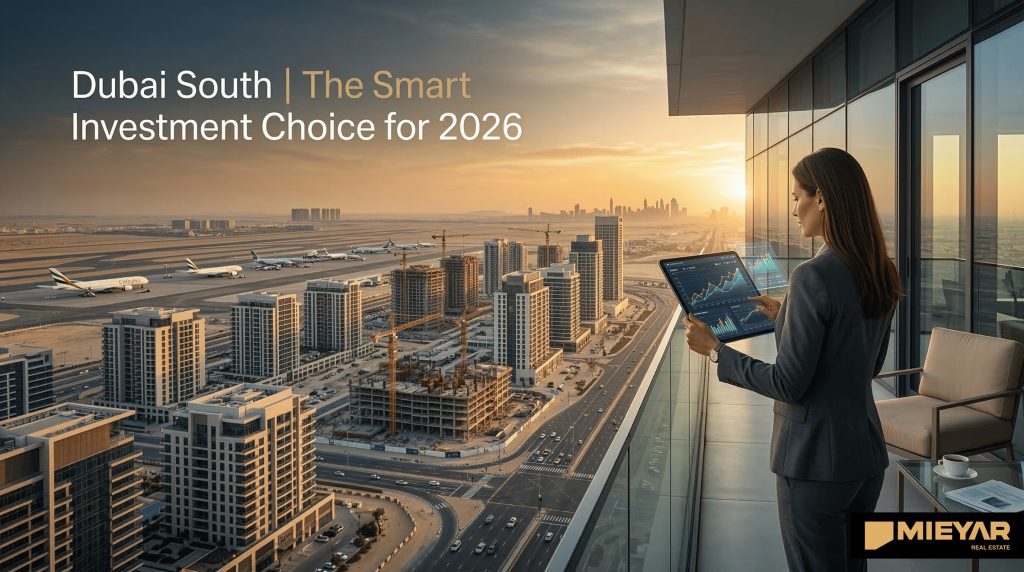
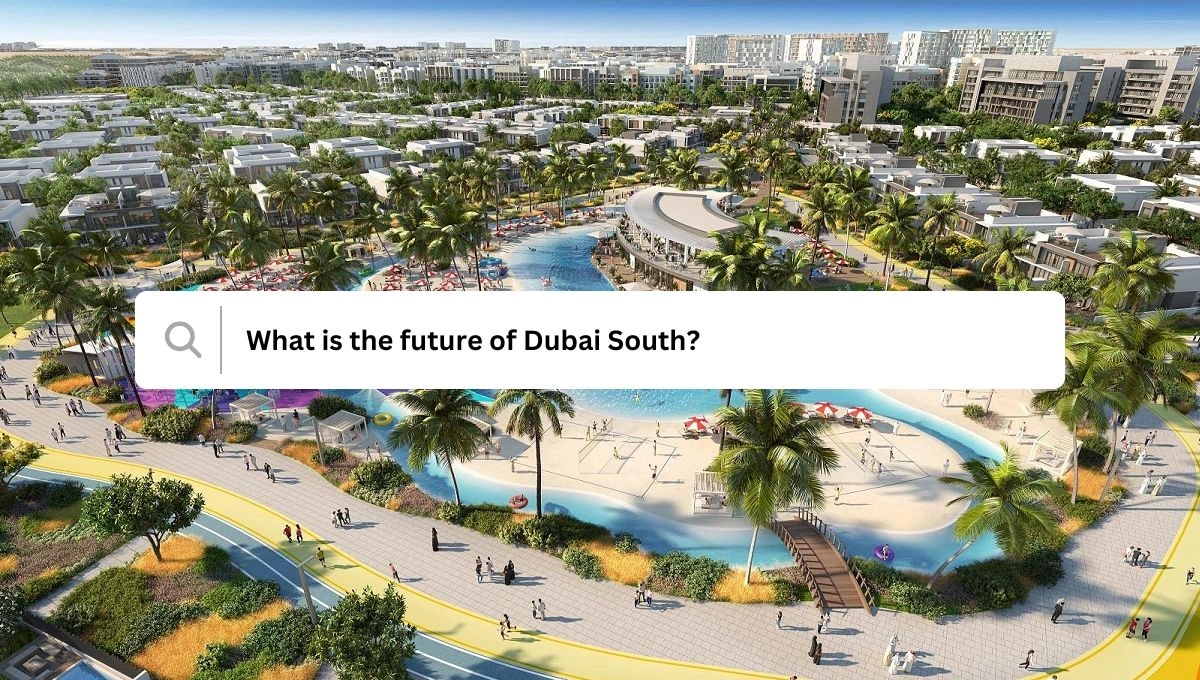
Dubai is no longer just expanding; it is shifting. For the last two decades, the center of gravity was Downtown and the Marina. But as we look toward the Dubai 2040 Urban Master Plan, the focus has undeniably moved to Dubai South.
If you are hearing buzz about “The Second City,” “The New Airport,” or “The Blue Line,” you are looking at the single most important urban development project in the region.
Is this the right investment for you? Is this where you will live in ten years? This guide covers everything you need to know about the 145-square-kilometer giant that is redefining Dubai.

1. The Anchor: The World’s Largest Airport (DWC)
The heartbeat of this entire development is Al Maktoum International Airport (DWC). This isn’t just an airport; it is a global logistics engine designed to future-proof the emirate’s economy.
-
The Vision: Once fully completed, it is planned to be the largest airport in the world.
-
Capacity: The government has approved a massive expansion to handle a staggering 260 million passengers annually.
-
The “Aerotropolis” Effect: This massive influx of transit and tourism creates an immediate, permanent demand for housing, hotels, and short-term rentals in the surrounding areas.
2. A “City Within a City”
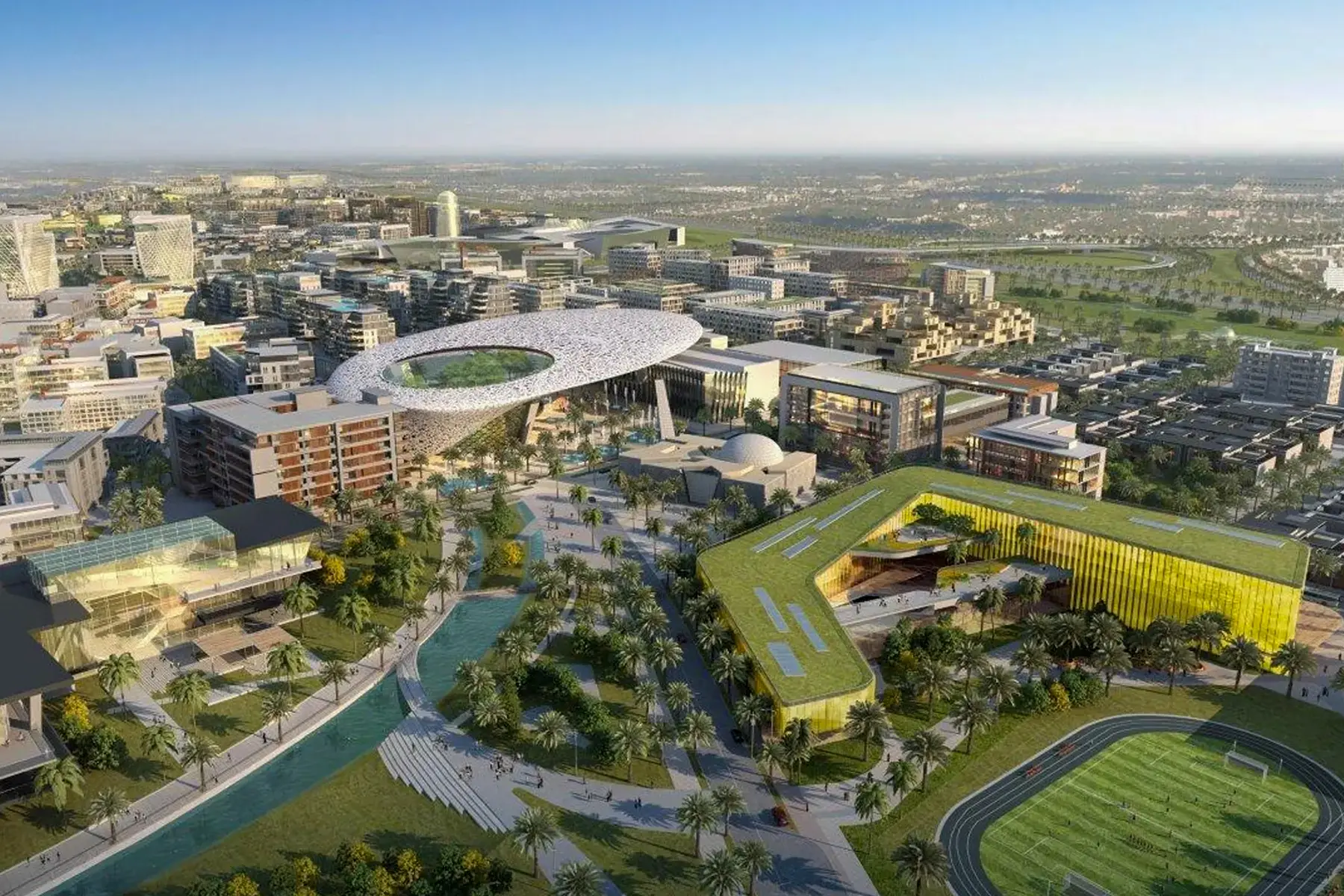
To call Dubai South a “neighborhood” is a mistake. With a total area of 145 square kilometers, it is effectively a second city capable of housing 1 million residents and creating 500,000 new jobs.
This density is crucial for investors. Where there are jobs, there is rental demand. The district is divided into specialized zones:
-
The Residential District: Affordable and luxury living connected to the airport.
-
The Logistics District: A global trade hub.
-
The Golf District: Luxury green living (Emaar South).
-
Expo City Dubai: The “brain” of the south, hosting tech firms and events.
3. Connectivity: Metro & Infrastructure
A major concern for any new development is isolation. Dubai South solves this with massive infrastructure upgrades.
-
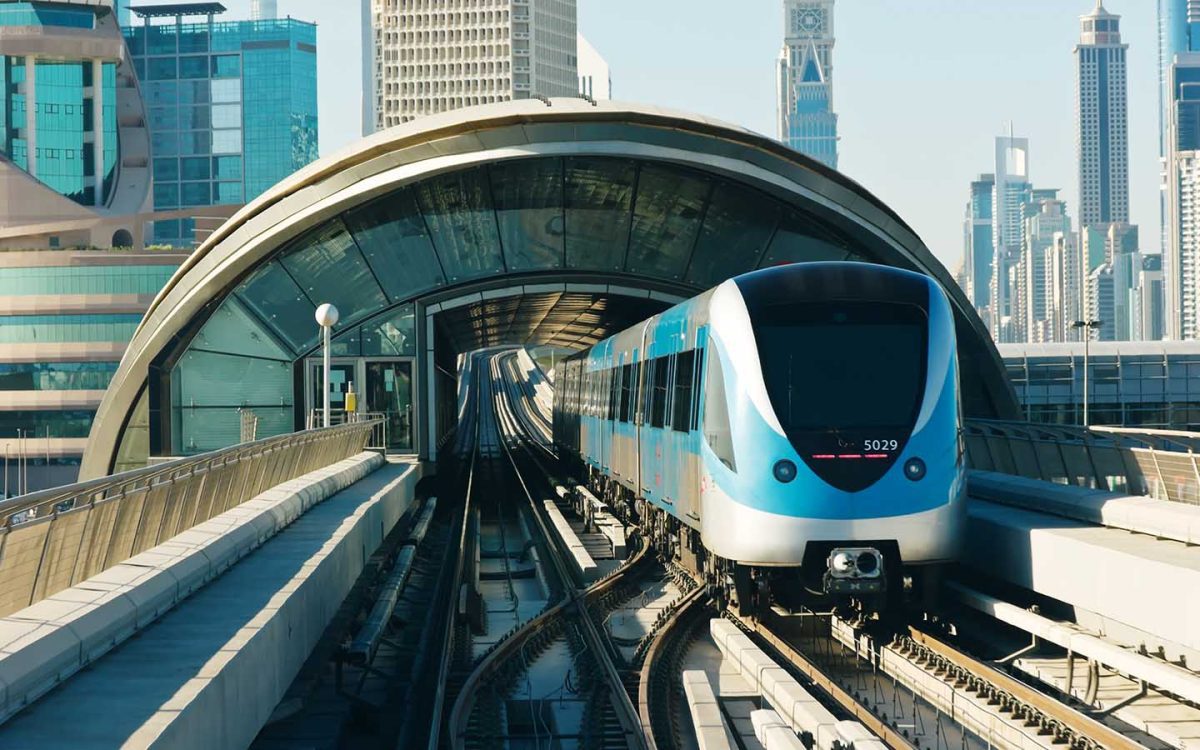
The Blue Line Metro: The recently approved Blue Line expands the wider Dubai network, increasing overall accessibility across the emirate.
-
The Value Add: Historically, property values in Dubai appreciate significantly (often 15-20%) once they are fully integrated into the transport grid.
-
Etihad Rail: The national railway network will also pass through this logistics hub, connecting it to Abu Dhabi and the wider UAE.
4. Developer Showdown: Who Should You Bet On?
This is the most critical section for investors. While the location is perfect, not every building will be a winner.
The Master Developers (Safe & Steady)
-
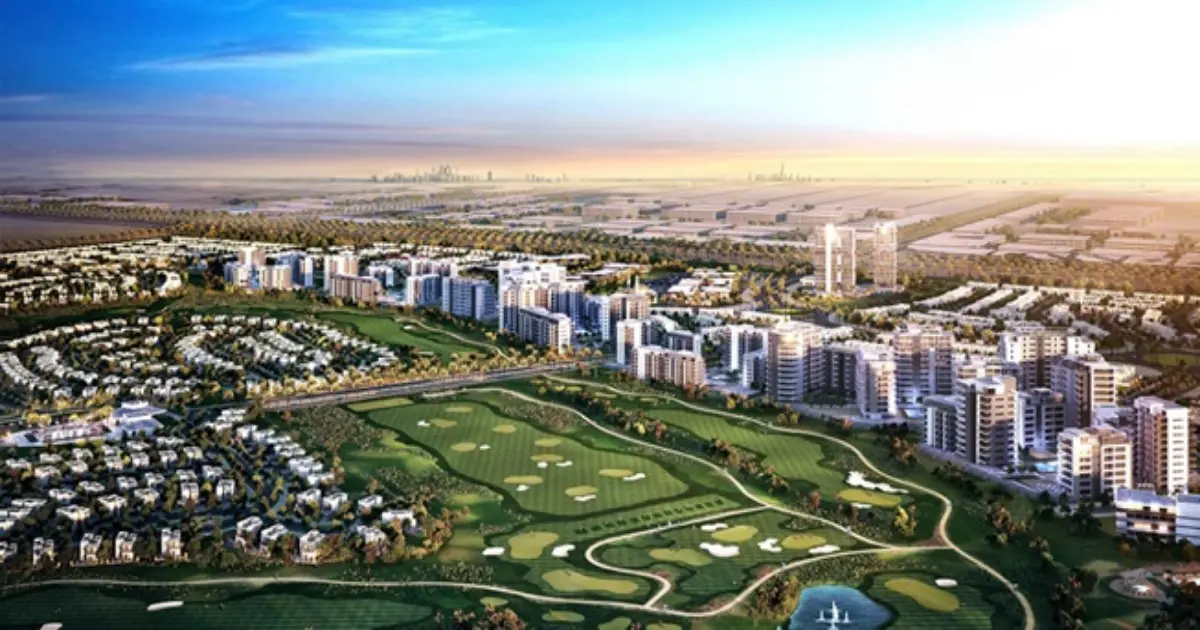
Emaar South (Golf District):
-
Best for: Families and long-term capital appreciation.
-
Key Projects: Golf Hills, Golf Lane.
-
Vibe: Green fairways, 18-hole championship golf course, and low-density villas. It’s the “Emirates Hills” of the South.
-
-
Dubai South Properties:
-
Best for: Lagoon living and luxury mansions.
-
Key Projects: South Bay (features a 3km crystal lagoon and 5-7 bedroom mansions) and The Pulse (villas and beachfront townhouses).
-
The Visionaries (High ROI & Unique Concepts)
-
Azizi Developments:
-
Best for: Water lovers and luxury flair.
-
Key Project: Azizi Venice. A massive undertaking featuring its own opera house and swimmable crystal lagoon.
-
-
BT Properties & Avenew:
-
Best for: Smart investors looking for value.
-
Key Projects: Waada and Avenew 888 (Modo). These often offer lower entry prices, meaning your capital appreciation percentage could be higher.
-
Ready to see the numbers? Check out the latest inventory and prices here:
The Ultimate Dubai South FAQ: 25+ Real Questions Answered
We analyzed hundreds of discussions from real investors and residents on Reddit and property forums to answer the questions people actually ask.

💰 Investment & Money
1. Is Dubai South a good investment for 2026?
Yes. It is consistently ranked as the 4th highest-selling area in Dubai. With the airport expansion confirmed and the 2040 plan in motion, it offers a high potential for capital appreciation compared to fully developed areas like Marina.
2. What is the current rental yield in Dubai South?
Yields currently average between 5% to 7%. However, as the airport expands and 500,000 jobs are created, demand for rental units is expected to surge, potentially driving yields higher.
3. Is it better to buy Off-Plan or Ready property here?
Off-Plan: Better for capital growth (buying at today’s lower prices before the infrastructure is finished).
Ready: Better if you need immediate rental income. However, ready stock is limited compared to off-plan supply.
4. Can I “flip” property in Dubai South quickly?
Flipping (selling before handover) is risky in a master-planned community with lots of supply. This is a long-term play (3-5 years). The real gains will come as the airport and Metro milestones are hit.
5. How does the price per sq. ft. compare to Downtown?
Dubai South is significantly cheaper, often trading between AED 1,100 – 1,600 psf, whereas Downtown can easily exceed AED 2,500+ psf. This “price gap” is why investors are moving here.
6. Which developer offers the best payment plan?
Smaller developers like BT Properties (Waada) or Avenew often offer more flexible plans (e.g., 1% monthly) compared to master developers like Emaar, who typically require larger installments.
7. Is there an oversupply risk?
There is a lot of supply coming, but it is matched by the government’s target of 1 million residents. The risk is short-term volatility, but the long-term demand from the airport workforce is massive.

✈️ Living & Lifestyle
8. Is it noisy living near the largest airport in the world?
This is the #1 concern.
-
The Reality: Most residential districts (like Emaar South and The Pulse) are designed parallel to runways, not directly under flight paths.
-
The Exception: Noise levels will vary. Modern construction has high sound insulation, but outdoor noise is inevitable in an “Aerotropolis.”
9. Does the area feel “isolated” or like a ghost town?
Currently, yes, some parts feel quiet. However, communities like The Pulse are already lively with residents. It is a developing city, so early adopters deal with construction in exchange for future value.
10. Are there supermarkets and amenities?
Yes. There are already operational branches of Lulu Hypermarket and Spinneys, along with community centers, gyms, and cafes. It is not a desert; it is a functioning town.
11. Is there a “sewage smell” in the area?
Some residents in older phases of “The Pulse” have reported intermittent smells from a nearby treatment plant. However, Dubai South has been actively upgrading infrastructure, and newer launches (like South Bay) are further removed from these utility zones.
12. Is it family-friendly?
Extremely. Emaar South and South Bay are designed with families in mind, featuring parks, pools, kid’s play areas, and schools planned within the master community.
13. How is the build quality of “The Pulse”?
Residents generally report good value for money. It is not “ultra-luxury” like Palm Jumeirah, but it is solid, modern, and well-maintained by Dubai South Properties.
Location & Connectivity south dubai
🚆 Location & Connectivity
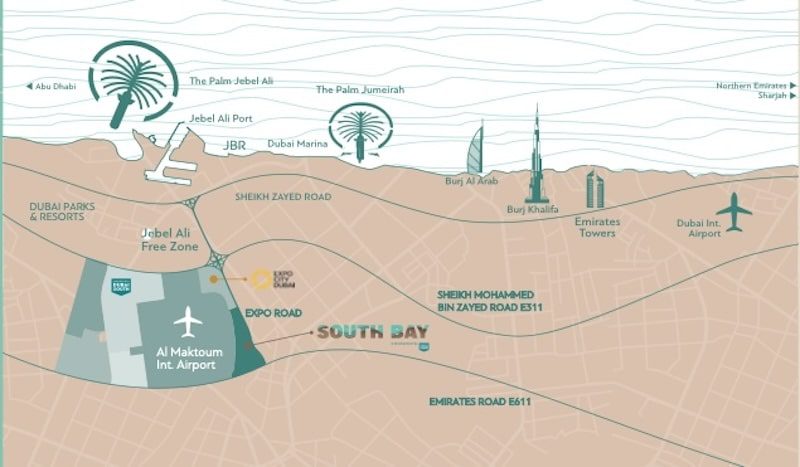
14. How far is it from Downtown Dubai?
Currently, it is a 35-45 minute drive. It is not “close” to the Burj Khalifa today. But remember, by 2040, Dubai South is the new center.
15. Is there public transport?
Yes. The F55 bus connects the residential areas to the Expo 2020 Metro Station.
16. When will the Blue Line Metro reach Dubai South?
The Blue Line is approved and construction is starting, with a target operation around 2029. This will directly link the area to the wider network.
17. How is the traffic within the community?
Currently, internal traffic is non-existent. The roads are wide and empty. The main traffic you will face is on Expo Road commuting towards the city during rush hour.
18. Is it close to the beach?
The natural beach (JBR/Marina) is 25-30 mins away. However, projects like South Bay and Azizi Venice are building massive artificial crystal lagoons, effectively bringing the beach to your doorstep.
🏗️ Projects & Developers
19. Emaar South vs. Dubai South Properties: Which is better?
-
Emaar South: Better for resale value and brand recognition (the “safe” bet).
-
Dubai South (South Bay): Better for unique lifestyle (lagoons) and larger unit sizes for the price.
20. Is Azizi Venice realistic?
It is an ambitious project. Azizi has a history of delays but also of delivering massive communities (like Riviera). If they pull off the Opera House and Lagoon, it will be a landmark. Expect a longer timeline than promised.
21. What is “South Bay”?
It is a premium cluster by Dubai South Properties featuring a 3km crystal lagoon. It is unique because it offers massive 5-7 bedroom mansions, which are rare in this price bracket.
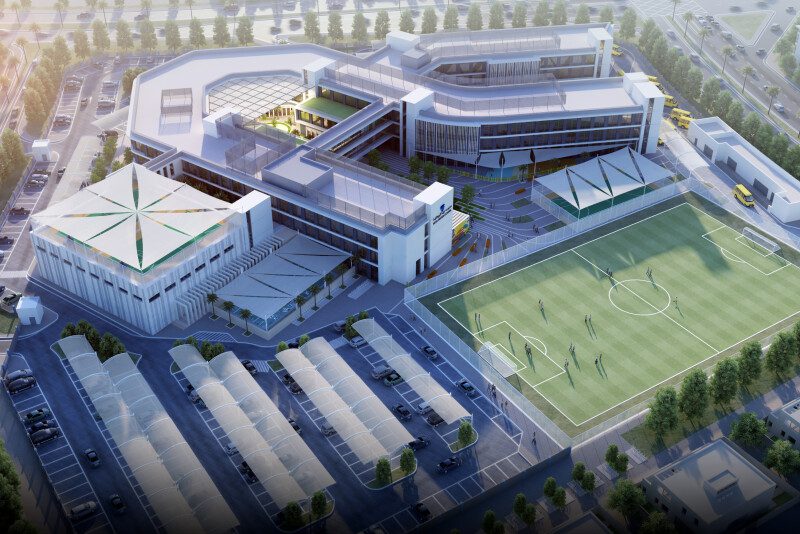
22. Are there schools nearby?
Yes, there is a British curriculum school operational in Emaar South, and more are planned as the population hits the 1 million target.
⚠️ Risks & Concerns
23. What about flooding? Did it flood in the recent rains?
Like many parts of Dubai (Mudon, Town Square), some areas experienced water accumulation. However, because Dubai South is newer, the drainage infrastructure is generally more modern than older parts of the city.
24. Will construction noise be an issue?
Yes. For the next 5-10 years, this is a construction site. If you work from home and need absolute silence, choose a “ready” phase in The Pulse or Emaar South, away from new active cranes.
25. Is it safe to invest from abroad (e.g., from India or UK)?
Yes, thousands do. The key is using a reputable agency to manage the transaction..
26. Why do some people call it “The New JVC”?
Because like JVC 10 years ago, it is currently the “affordable, far-out” option that everyone is ignoring. Today, JVC is one of the most populated and appreciated areas. Dubai South is following that exact same trajectory, but on a much larger scale.
The Final Verdict
Dubai South is not a “get rich quick” scheme. It is an “infrastructure bet.” You are betting that the world’s largest airport and the government’s 2040 vision will succeed. History in Dubai suggests that betting with the government is usually a winning strategy.
Don’t navigate this massive market alone.




 English
  العربية